
Quick Summary
Compromised flue tiles and decaying mortar joints create severe fire and carbon monoxide hazards, making timely chimney liner repair in Bristol essential for home safety. Legacy Chimney Cleaning Greater Hartford provides specialized flue restoration by utilizing advanced video diagnostics to pinpoint hidden damage and installing long-term stainless steel or resurfacing solutions. After reading, homeowners will understand key warning signs of flue failure, what to expect during installation, and how to schedule a free on-site estimate and video flue inspection for chimney liner repair in Bristol.
Chimney Liner Repair in Bristol: Safe Flue Restoration
When clay flue tiles crack or mortar joints decay inside a chimney, the barrier protecting your home from heat, sparks, and combustion gases disappears. Maintaining flue integrity is especially important. Data from the U.S. Fire Administration (USFA) show that most residential heating fires are confined to chimneys, flues, or fuel burners.[1]
As Legacy Chimney Cleaning Greater Hartford points out, whether you heat with wood, oil, or natural gas, addressing chimney liner problems early prevents dangerous carbon monoxide leaks and protects your structural framing from heat transfer.[2]
What Factors Influence Chimney Liner Repair and Replacement Costs?
Chimney liner repair costs vary depending on the chimney’s height, internal condition, fuel type, and the restoration method required. Minor joint repair on an otherwise sound clay flue is a smaller job, whereas installing a full relining system for a multi-story home represents a larger investment.
| Service Type | Primary Application | Typical Scope |
|---|---|---|
| Video Inspection | Diagnostic evaluation before repair or fuel conversion | Full-length camera scan of internal flue tiles and joints |
| Flue Joint Resurfacing | Structurally intact clay tiles with eroded mortar seams | Application of sealant over gaps |
| Chimney Relining | Cracked, spalled, unlined, or mis-sized flues | Full-length liner installation |
| Flue Tile Removal | Severely shifted, broken, or undersized terracotta tiles | Removal of old clay to fit a properly sized liner |
Key Variables That Shape Project Estimates
- Fuel Source and Appliance Requirements: Different heating appliances require appropriate exhaust pathways and liners capable of handling specific temperatures and venting needs.
- Chimney Geometry and Access: Multi-flue stacks, offset bends, and steep rooflines require extra labor and specialized setup compared to a straight vertical run.
- Extent of Clay Tile Damage: If the existing clay tiles have cracked completely or collapsed, technicians may need to remove the broken terracotta sections before installing a new liner down the stack.
Warning Signs of a Damaged Chimney Flue Liner
Because flue liners sit hidden behind brickwork, Legacy Chimney Cleaning Greater Hartford notes that damage often goes unnoticed until symptoms appear in the living area or during an annual sweep.[4]
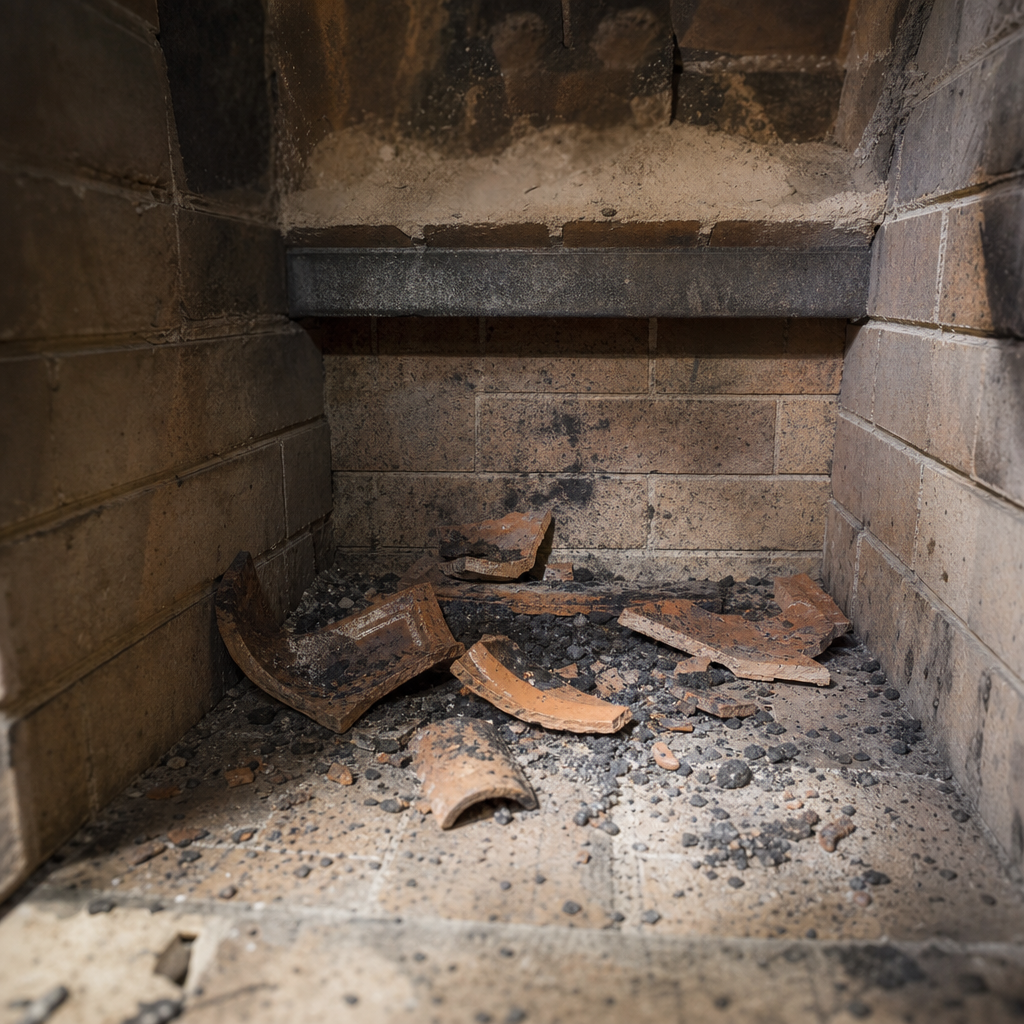
1. Terracotta Shards in the Firebox or Cleanout Door
Finding reddish clay fragments or flakes on the smoke shelf, behind the fireplace damper, or in the cleanout door is a clear sign of flue tile deterioration.[5]
2. Smoke Rollback and Drafting Problems
If smoke spills into the room instead of pulling up the chimney, broken tile fragments or deteriorating joints may be disrupting the draft. Obstructions and unsealed gaps reduce the upward draw needed to pull exhaust out of the home.
3. Persistent Chemical or Creosote Odors
Cracked liners allow combustion odors to seep through brick and mortar into living spaces. Soot deposits within cracked flue walls can also send strong, acrid smells into adjoining rooms.
4. White Stains (Efflorescence) and Damp Brickwork
White powdery salt deposits on exterior chimney masonry or damp spots on interior drywall near the chimney breast indicate moisture escaping through compromised flue sections.
Can a Damaged Chimney Liner Be Repaired, or Must It Be Relined?
Need chimney liner repair in Bristol?
We’re available now — call for a fast, free estimate.
As Legacy Chimney Cleaning Greater Hartford explains, damaged liners may sometimes be repaired if the tiles remain structurally sound. However, cracked, missing, or badly damaged liners often need relining.
| Repair Approach | Best For |
|---|---|
| Joint Resurfacing | Sound tiles with eroded joints |
| Relining | Cracked, spalled, missing, or badly damaged flues |
What to Expect During Chimney Liner Installation
According to Legacy Chimney Cleaning Greater Hartford, installing a chimney liner is a standard method for restoring safe draft in residential chimneys. Here is how the process generally works:[3]
- Video Evaluation: A technician inspects the length of the flue to assess cracks, offsets, and debris.
- Chimney Prep and Sweeping: The chimney is cleaned to remove soot, creosote, and loose debris.
- Liner Insertion: A properly sized liner is lowered through the stack and insulated where necessary.
- Top Plate and Appliance Connection: The liner is securely connected to the heating appliance or fireplace and sealed at the top.
Most straightforward liner installations take about one day to complete, allowing homeowners to resume heating safely with minimal downtime.
Frequently Asked Questions
How much does chimney liner repair cost?
Costs vary depending on whether the chimney needs localized joint repair or a full relining. Key factors include chimney height, the number of stories, appliance type, and whether damaged clay tiles must be removed first.
Do I need a chimney inspection before repairing the liner?
Yes. An inspection before repair or relining identifies hidden damage, confirms whether the flue structure is sound, and ensures the correct repair method or liner size is selected.
Can I vent a new furnace into my existing clay chimney liner?
Older clay flues may not be properly sized for modern heating appliances. Legacy Chimney Cleaning Greater Hartford cautions that an incorrectly sized flue can impair draft and lead to moisture problems. Installing a correctly sized liner helps maintain proper draft velocity and protects the chimney masonry.
Need chimney liner repair in Bristol?
We’re available now — call for a fast, free estimate.
Sources
- Search datasets – Catalog – Data.gov – catalog.data.gov (2026)
- Home Fire Fatalities in the News – National Fire Academy – apps.usfa.fema.gov (2026)
- Heating Fires in Residential Buildings (2017-2019) – USFA.FEMA.gov – usfa.fema.gov (2019)
- Get Your Chimney Cleaned but Be Cautious of Chimney Sweep and … – portal.ct.gov
- Fire Marshal's Office | Bristol, CT – Official Website – bristolct.gov
Chimney Liner Repair in Nearby Cities
We also serve the communities around Bristol:
- Chimney Liner Repair in Hartford
- Chimney Liner Repair in West Hartford
- Chimney Liner Repair in Manchester
- Chimney Liner Repair in New Britain
- Chimney Liner Repair in Newington
- Chimney Liner Repair in Wethersfield
- Chimney Liner Repair in South Windsor
- Chimney Liner Repair in Farmington
Frequently Asked Questions
What is the best material for chimney liner repair in Bristol?
High-grade stainless steel liners and specialized resurfacing compounds provide the longest-lasting protection against thermal shock and corrosive combustion gases. Legacy Chimney Cleaning Greater Hartford evaluates your heating appliance and flue geometry to install the most durable relining solution for your Bristol home.
How long does a new stainless steel chimney liner last?
When professionally installed and maintained annually, stainless steel chimney liners typically last between 25 to 50 years or more. Legacy Chimney Cleaning Greater Hartford ensures precision sizing and proper insulation to maximize the system's lifespan and fire safety.
How can I schedule a video flue inspection for chimney liner repair in Bristol?
Homeowners can contact Legacy Chimney Cleaning Greater Hartford by phone or online to book a free on-site estimate. Their expert team performs a comprehensive Level 2 video flue inspection to identify cracks and draft hazards before recommending the optimal repair plan.
About the author
 |
Marcus Dalton Marcus Dalton is a certified Chimney Sweep Professional with over 12 years of hands-on experience in residential chimney maintenance. A graduate of the National Chimney Sweep Training School, he specializes in structural inspections, creosote removal, and draft troubleshooting for wood-burning systems. Marcus is dedicated to educating New England homeowners on preventative maintenance and fire safety best practices. |
Chimney overdue for a cleaning or inspection?
We’re available now — call for a fast, free estimate.
Call Now - Free Estimate