
How Often Should You Clean Your Chimney in Hartford, CT? The Real Answer Depends on What’s Burning in Each Flue
Most Hartford chimneys need cleaning once a year, but that rule only holds if you’re tracking every flue in your stack — and in this city’s two- and three-family housing stock, most people aren’t. If you burn wood regularly, annual sweeping is the minimum; gas and oil appliances need annual inspection with lighter cleaning; and a flue you haven’t used in years still needs checking for moisture damage, nesting, and liner deterioration before you assume it’s fine. For a free assessment of every flue in your chimney, call Legacy Chimney Cleaning Greater Hartford at (877) 257-4956.

We’ve been on Hartford rooftops for 17 years — we’ll tell you what’s actually up there. Paul Torres, our owner and lead technician, grew up in Parkville watching his father fight a smoky chimney through Connecticut winters, and he’s spent nearly two decades learning how this city’s unique housing stock changes every answer the national guides give you. The NFPA’s “once a year” standard was written for a single-family home with one wood-burning fireplace. It doesn’t account for a Barry Square triple-decker where one flue serves a gas boiler running 200 heating days annually, the adjacent flue hasn’t seen a fire since 2019, and neither landlord nor tenant can say for certain which flue was “cleaned last year.”
Why Hartford’s Housing Stock Breaks the Standard Cleaning Schedule
The bulk of Hartford’s residential neighborhoods — Asylum Hill, Blue Hills, Barry Square, and beyond — are built from late-19th- to early-20th-century balloon-frame two- and three-family homes. Their masonry chimneys were designed for coal, converted to oil, then converted again to natural gas, often without proper relining. What you’re left with is a single shared chimney stack containing multiple separate flues, each with its own appliance history, its own soot load, and its own invisible deterioration timeline.
Paul Torres sees the same scenario every autumn: a landlord calls us for a sweep because the first-floor tenant mentioned a smell. We inspect the stack and find one flue was cleaned 14 months ago — good enough — while the adjacent flue, venting the second-floor gas boiler, hasn’t been touched since 2017. The tenant assumed the “chimney cleaning” they heard about covered the whole stack. It didn’t. In Hartford’s rental market, where tenant turnover is constant and maintenance records rarely transfer between property managers, this gap is the norm, not the exception.
The West End’s large Victorians add a second category: single-family homes with four or five separate flues in one oversized chimney stack, often with only the main fireplace ever making it onto the cleaning schedule. The dining room flue, the bedroom flue, the kitchen vent — these become architectural ghosts, remembered only when water stains appear or a squirrel finds its way down.
Here’s what we recommend tracking for every flue in your Hartford stack:
- Wood-burning fireplace: Annual sweep minimum; twice yearly if you burn more than three cords per season or burn unseasoned hardwood
- Gas boiler or furnace flue: Annual inspection with light cleaning; corrosion and condensation deposits build differently than wood soot but still restrict flow
- Oil appliance flue: Annual sweep mandatory; oil soot is acidic, granular, and far more corrosive to clay tile and mortar than gas or wood byproducts
- Unused or sealed flue: Biennial inspection for moisture intrusion, nesting, and liner fracture — especially critical after Hartford’s freeze-thaw winters
- Recently converted appliance: Immediate inspection post-conversion; a flue sized for coal or oil rarely meets code for modern gas exhaust without relining
Why Hartford’s Freeze-Thaw Climate Changes Your Spring Timing
Hartford sits in the Connecticut River Valley, a natural cold-air drainage basin that gives it harder freeze-thaw cycling than coastal Connecticut cities. Averaging roughly 43 inches of snow annually, our chimneys absorb repeated ice loads at the crown and flashing line from December through March. That thermal stress doesn’t just damage brick and mortar — it creates liner conditions that can turn a passable flue into a hazardous one between one heating season and the next.
Paul Torres flags crown stress and mortar-joint erosion on virtually every spring inspection. The damage isn’t always visible from the ground. Hairline fractures in clay tile liners — common in Hartford’s original 4-inch terra cotta flue systems — open wider during freeze-thaw cycles, allowing exhaust gases to seep into wall cavities and adjacent flues. We’ve found CO migration between flues in the same stack more than once, particularly in Asylum Hill and Blue Hills properties where original liners were never upgraded during fuel conversions.
This is why we tell Hartford homeowners: spring inspection is your minimum, not your maximum. The NFPA says “at least once a year” for combustion byproduct removal. For Hartford’s masonry, the post-winter inspection catches structural deterioration that a fall sweep alone would miss. By September, another freeze-thaw cycle has begun. You want eyes on that crown and liner before you light the first fire.
The Self-Assessment Question Every Hartford Homeowner Should Ask
When we arrive at a job, Paul Torres asks one question before climbing: “When did the other flue in your chimney get cleaned?”
If the answer is uncertain, that uncertainty is the answer.
In a multi-flue stack, frequency advice means nothing if you’re not tracking every flue individually. We’ve heard “we had it cleaned last year” from tenants who were referring to a sweep of the fireplace flue, while the boiler flue beside it hadn’t been touched since the Obama administration. The national “annual cleaning” standard assumes a one-to-one relationship between chimney and flue. Hartford’s housing stock breaks that assumption.
Here’s a practical tracking framework we share with Hartford property owners:
| Flue Location | Serves | Fuel Type | Last Service Date | Next Due | Notes |
|---|---|---|---|---|---|
| Front flue | 1st floor unit | Natural gas boiler | [Date] | [Date + 12 months] | Check for condensation corrosion |
| Rear flue | 2nd floor unit | Wood fireplace | [Date] | [Date + 12 months, or 6 months if heavy use] | Inspect for creosote glaze |
| Center flue | 3rd floor unit | Sealed/unused | [Date] | [Date + 24 months] | Check for moisture, nesting, liner integrity |
Most Hartford landlords don’t maintain this record. The ones who do avoid the emergency call in January when a blocked flue backs up carbon monoxide into an occupied unit.
What Professional Cleaning Actually Includes — and Why Materials Matter
A proper chimney sweep in Hartford isn’t just running a brush. For wood-burning flues, we remove creosote buildup in all three stages — powdery soot, flaky deposits, and the hardened glaze that requires specialized rotary equipment. For gas and oil flues, we’re inspecting for condensation corrosion, debris blockage, and liner deterioration that restricts draft. In every case, we’re examining the crown, cap, flashing, and mortar joints for the freeze-thaw damage this climate guarantees.
When relining or repair is needed, we use professional-grade materials from recognized chimney-industry brands: DuraFlex stainless steel liners for high-efficiency gas and oil applications, HeatShield resurfacing for restoring deteriorated clay tile without full liner replacement, and Gelco and Olympia Chimney components for cap and crown rebuilds that hold up to Hartford’s winter exposure. The “Legacy” in our name reflects how we approach this work — repairs and installations built to last years, not just to pass an inspection.
Paul Torres personally leads every job. Over 1,200 homeowners across Greater Hartford have trusted us with their chimneys, and that track record was built brush by brush, roof by roof, not through subcontractor networks or dispatch boards. From your annual sweep to a full liner rebuild, you’re getting the same technician who started this company 17 years ago.
If you’re unsure about your flue schedule, Chimney Cleaning & Sweep in Hartford is where we start — with a full-stack inspection that identifies what you’re actually dealing with, not just the flue you remembered to book.
FAQs
A standard sweep for a single wood-burning flue in Hartford typically runs $175–$275, while gas or oil flue inspections with light cleaning start around $150–$225; multi-flue stacks, heavy creosote removal, or access challenges in older homes can push the upper range to $350–$450. We provide upfront pricing before any work begins — call (877) 257-4956 for a free estimate on your specific stack.
We can, but we don’t recommend it — cleaning one flue while ignoring adjacent flues in the same Hartford stack creates liability gaps that have led to blocked vents, CO migration, and nesting hazards we’ve discovered during routine calls. We inspect the full stack and document every flue’s condition so you know what you’re dealing with, not just what you remembered to book.
For localized clay tile deterioration, HeatShield resurfacing is typically 40–60% less than a full stainless steel liner replacement; however, if the liner is fractured throughout multiple sections or improperly sized for a converted appliance, full relining with DuraFlex becomes the more cost-effective long-term solution. Paul Torres assesses each flue individually — we’ve saved Hartford homeowners thousands by matching the repair to the actual damage rather than defaulting to the most expensive option.
If you can’t state with certainty when it was last inspected — including the specific year — it needs attention; in Hartford’s climate, unused flues accumulate moisture, develop liner fractures from freeze-thaw cycling, and attract nesting that can block adjacent active flues or introduce moisture damage to shared masonry. We recommend a biennial inspection for any flue not in active use, with immediate attention if you’ve noticed water staining, animal sounds, or debris falling into the firebox.
When to Call Legacy Chimney Cleaning Greater Hartford
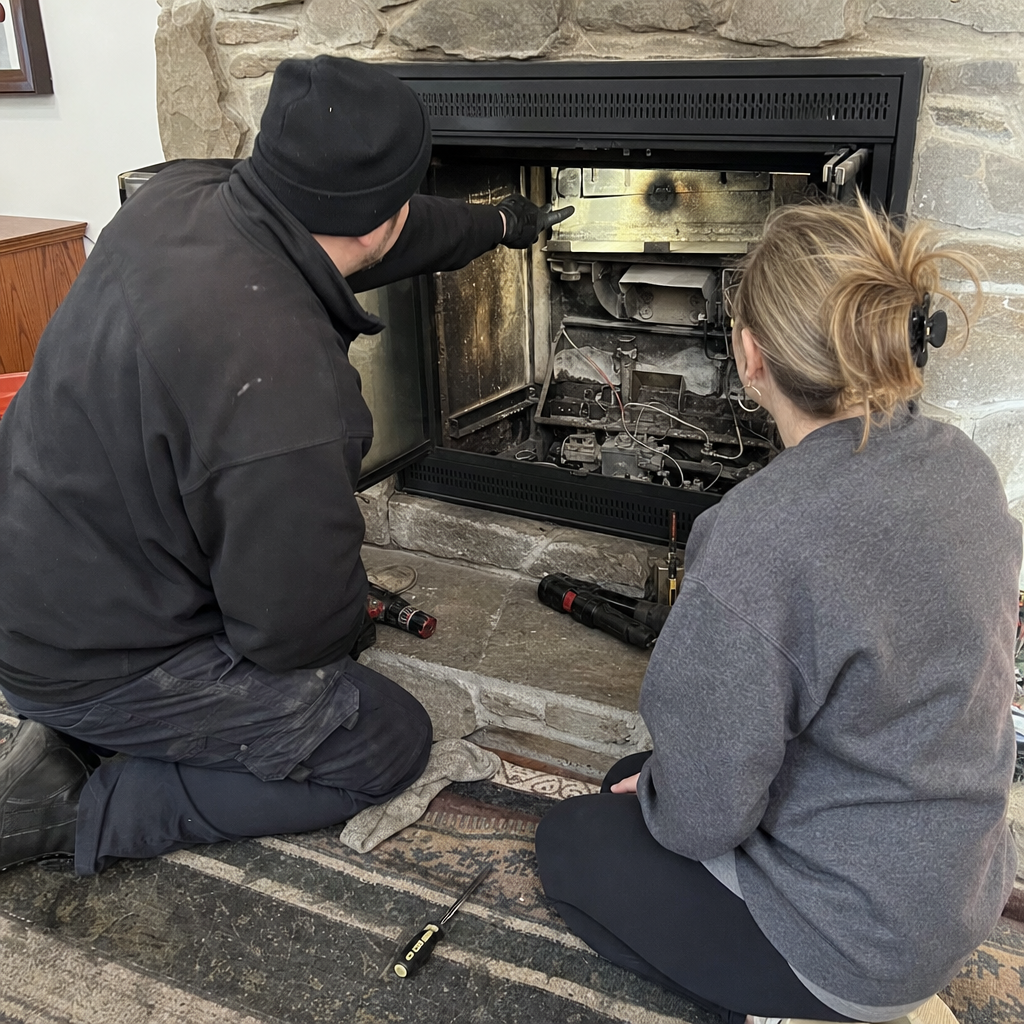
If you’re staring at your chimney wondering which flue was cleaned when — or if “annual cleaning” has meant whichever flue you happened to remember — it’s time for a full-stack assessment. Paul Torres will walk you through every flue’s condition, show you what the camera sees, and give you a schedule that matches your actual appliances, not a generic rule written for single-family suburbs.
We’ve spent 17 years on Hartford rooftops because this city’s housing stock demands specialists who understand its history. Call (877) 257-4956 for a free, no-pressure estimate — and bring your questions about the flue you haven’t thought about in years.
Written by Paul Torres, Owner & Lead Technician at Legacy Chimney Cleaning Greater Hartford, serving Hartford, CT.