
Fast, Reliable Chimney Liner & Rebuild Across Plainville
Chimney liner repair and rebuild in Plainville typically costs $1,800–$4,500 depending on scope, with most inspections scheduled within 48 hours and liner installations completed in one to two days. If you’re smelling smoke in your living room or your gas furnace keeps shutting off on pressure switch faults, your flue is trying to tell you something — and in Plainville’s older neighborhoods, it’s usually a liner that’s failed after fifty-plus years of freeze-thaw punishment.
We’ve been driving to Plainville since 2007, and our Chimney Liner & Rebuild crew knows the local housing stock cold. From the cape cods clustered around Linden Place and Woodford Avenue to the colonials lining East Main Street near the Plainville Historic District, these post-war homes share a common problem: chimneys built for coal and oil now struggling with modern gas exhaust. Paul Torres personally leads every job, and we’re usually on-site in Plainville within a day or two of your call. Reach us at (877) 257-4956.
Why Legacy Chimney Cleaning Greater Hartford Is Plainville’s Preferred Chimney Liner & Rebuild Company
Plainville homeowners don’t need a generalist with a ladder — they need someone who understands why a 1964 cape cod on a side street fails differently than a 1990s colonial in Kensington. Paul Torres has spent 17 years in the chimney trade, and he still climbs every roof himself. That hands-on approach has earned Legacy Chimney Cleaning 1,211 verified reviews averaging 4.7 stars — one of the highest review volumes in the local chimney trade, built job by job over nearly two decades.
Our response time to Plainville is typically next-day or within 48 hours for standard inspections, and we carry the full inventory of DuraFlex stainless liners, HeatShield resurfacing materials, and crown repair supplies so we’re not making two trips. We know the ZIP 06062 area well: the valley-floor lots near the Pequabuck River that fight downdraft issues, the dense cape cod streets where exterior chimneys ice up by Thanksgiving, and the older colonials on Route 10 corridor with shared flue stacks that need careful sizing. When you hire us, you’re getting Paul Torres on your roof — not a subcontractor learning Plainville’s quirks on your dime.
Our Chimney Liner & Rebuild Services in Plainville
Stainless Steel Liner Installation
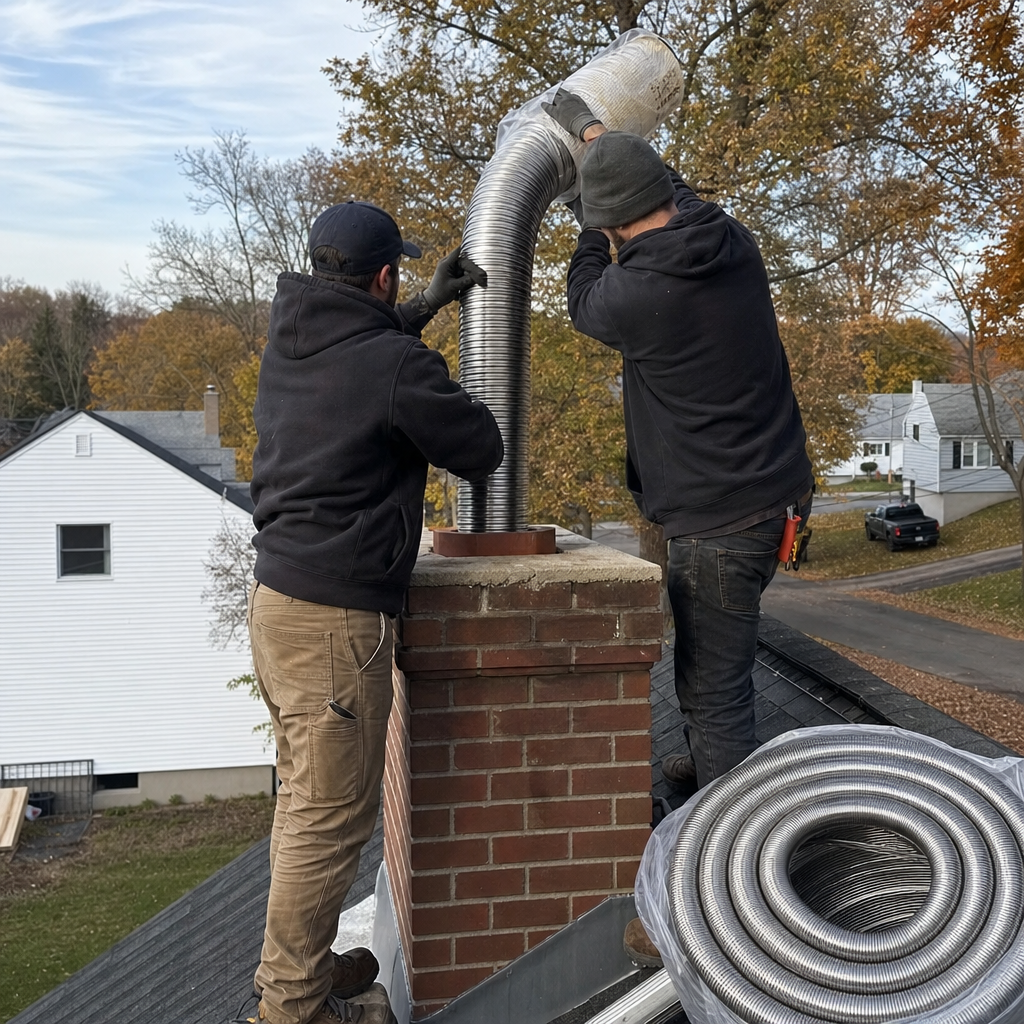
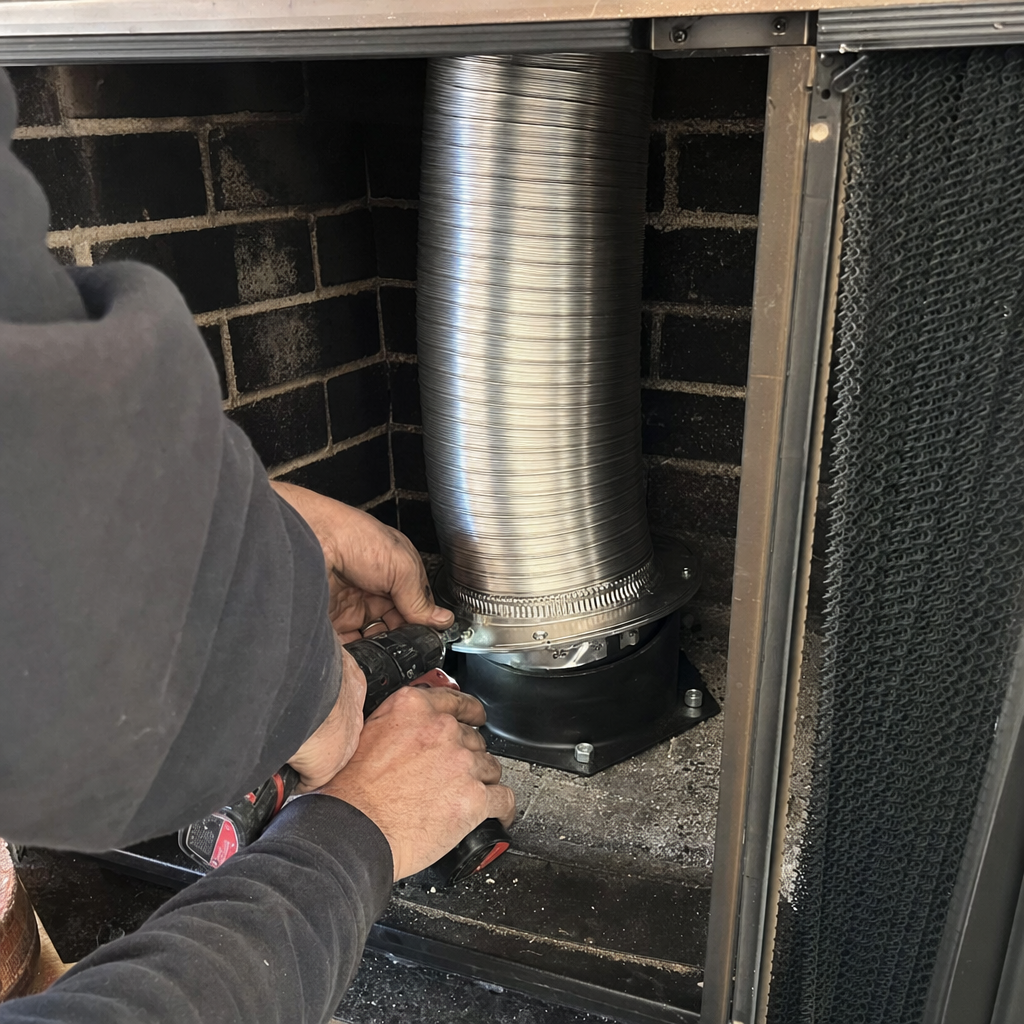
Stainless steel liners are our most common solution for Plainville’s pre-1975 homes. The original clay tile liners in these houses were sized for oil or coal furnaces burning at much higher temperatures — when you switch to natural gas or propane, that oversized flue can’t maintain adequate draft. The cooler, wetter exhaust condenses on the flue walls, accelerating mortar deterioration and creosote buildup. We install DuraFlex stainless steel liners precisely sized for your modern appliance, creating a sealed, correctly-dimensioned path from appliance to cap. On a 1964 cape cod on Linden Place, we found a cracked clay tile liner from decades of thermal cycling — the original oil furnace flue was too large for the new gas appliance. We installed a DuraFlex stainless steel liner sized for the modern gas exhaust and rebuilt the crown, fixing chronic downdraft issues from the Pequabuck River valley topography.

Flexible Liner Systems
Not every Plainville chimney runs straight. The offset flues common in 1950s ranches around Woodford Avenue — where the chimney shifts to avoid a stairwell or closet — demand a liner that can navigate bends without tearing or creating snag points for creosote. Flexible stainless liners handle these offsets while maintaining the smooth interior surface that promotes proper draft. We specify flexible systems from Olympia Chimney when the flue path demands it, and we always verify with a video scan before recommending this approach.

Liner Replacement & HeatShield Resurfacing
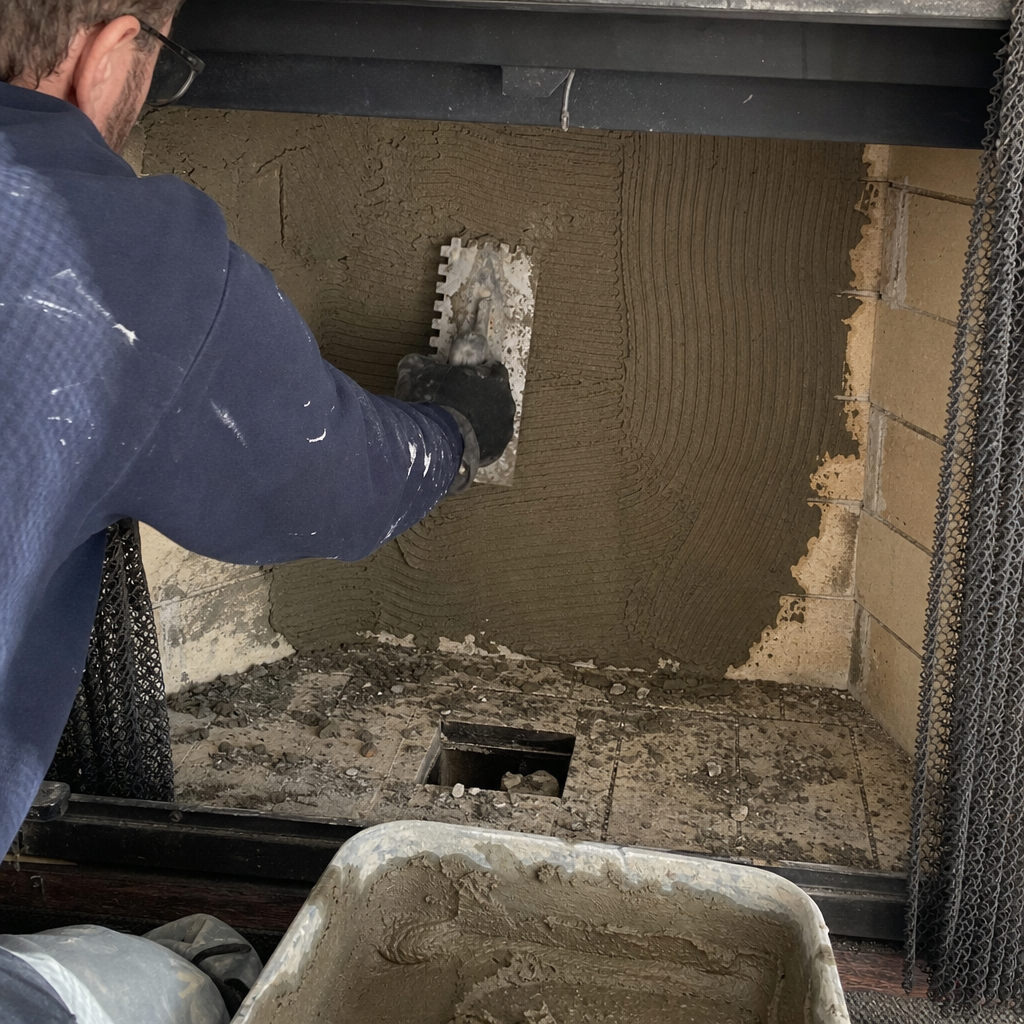
Some Plainville chimneys don’t need full liner replacement — yet. If your clay tiles show minor cracking or spalling but the flue is structurally sound, HeatShield cerfractory resurfacing can restore a smooth, sealed surface without the cost of full stainless insertion. This is particularly relevant for homeowners on East Main Street and surrounding blocks who want to preserve original masonry character while meeting modern safety standards. Paul Torres will show you the video scan and explain exactly where resurfacing works and where it doesn’t. We’re not in the business of selling you a full liner when a targeted repair will hold up.

Partial & Full Chimney Rebuild
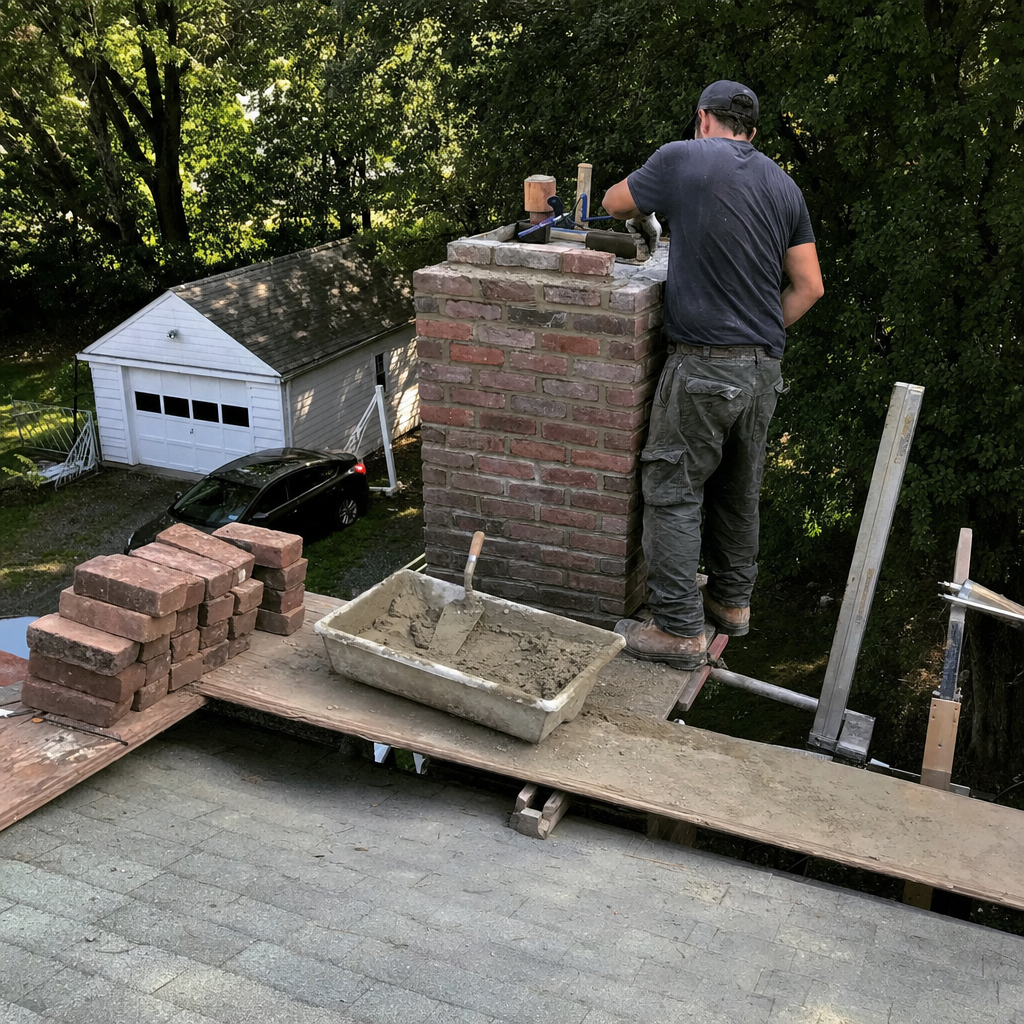
When the liner failure has compromised the surrounding structure — or when decades of freeze-thaw cycling have destroyed mortar joints beyond repointing — we rebuild. Partial rebuilds address the chimney crown, top few courses of brick, and flue transition; full rebuilds start from the roofline up. In Plainville, we see full rebuilds most often on exterior-wall chimneys that have been fully exposed to Central Connecticut’s weather for sixty-plus years. The cape cods on Plainville’s side streets frequently have the chimney stack built on an exterior wall rather than in the home’s thermal envelope, meaning the flue stays cold throughout the heating season and builds up stage-two creosote far faster than interior-stack chimneys — a pattern local sweeps learn to flag immediately on pre-1975 cape cod inspections. That same thermal stress cracks brick, opens mortar joints, and eventually requires structural intervention. We source brick and mortar matched to Plainville’s common regional blends, and Paul Torres oversees every course.
What happens when you call
- 1
A real person answersNo phone trees — you reach a local pro.
- 2
You get an upfront price rangeHonest numbers before anyone is dispatched.
- 3
A background-checked tech heads outLicensed & insured, dispatched right away.
- 4
You approve before work beginsNothing starts until you say go.
Trusted Brands We Service in Plainville
We don’t use hardware-store generics on chimney systems that need to last decades. Our liner installations rely on DuraFlex stainless steel and HeatShield cerfractory resurfacing products — both recognized standards in the chimney industry. For caps, dampers, and termination fittings on Plainville homes, we specify Gelco and Famco components, which we’ve found hold up better than budget alternatives through our genuine freeze-thaw cycling. We keep common sizes and fittings in stock, so most Plainville jobs don’t wait on parts. When you’re already dealing with a cold house and a red-tagged furnace, that turnaround matters.
Common Chimney Liner & Rebuild Problems We See in Plainville Homes
- Cracked clay tile liners from exterior-wall thermal stress. Plainville’s cape cods on side streets — Linden Place, Woodford Avenue, the blocks off East Main — often have chimneys built outside the home’s insulation envelope. These flues freeze hard overnight, then take rapid heat when the furnace fires. After forty years, the clay tiles crack and shift, creating gaps where exhaust can leak into wall cavities.
- Oversized flues causing condensation damage. The 1950s–1970s housing boom produced chimneys sized for coal or oil furnaces burning hot and dry. Modern gas appliances exhaust cooler and wetter. That mismatch means chronic condensation in the flue, which soaks mortar joints and spalls brick from the inside out. We’ve replaced liners in Plainville homes where the flue was literally dripping water down the masonry.
- Mortar joint deterioration accelerated by freeze-thaw. Central Connecticut’s temperatures cross 32°F dozens of times each winter. Water that seeps into compromised mortar expands, contracts, and eventually pushes the joint apart. On exterior chimneys in Plainville, this process runs faster than anywhere else in the house — and it’s often invisible from the ground until the damage is structural.
- Downdraft and smoke rollback from valley topography. The Pequabuck River valley creates persistent pressure differentials on valley-floor lots. A chimney with an undersized or damaged liner can’t generate enough draft to overcome these conditions, sending smoke or exhaust back into living spaces. Proper liner sizing and crown rebuilding usually resolve this, but only if the technician understands Plainville’s local topography.
Pricing for Chimney Liner & Rebuild in Plainville, CT
Here’s what Plainville homeowners can expect based on our 2024–2025 local jobs:
| Service | Typical Range in Plainville |
|---|---|
| Chimney inspection with video scan | $189–$249 |
| HeatShield liner resurfacing (single flue) | $1,800–$2,800 |
| Stainless steel liner installation (single flue, standard height) | $2,400–$3,800 |
| Flexible liner with offsets (complex flue) | $3,200–$4,500 |
| Partial rebuild (crown + top courses) | $2,800–$4,200 |
| Full chimney rebuild (from roofline) | $5,500–$9,000 |
Your actual cost depends on flue height, accessibility, appliance type, and whether we find hidden damage during the video inspection. We provide upfront pricing after inspection — no open-ended estimates. Every quote includes the full scope, materials by name, and timeline. Call (877) 257-4956 for a free estimate; we’ll inspect your Plainville chimney and give you real numbers you can plan around.
We Also Serve Cities Near Plainville
Our chimney liner and rebuild crews work throughout central Connecticut, including Bristol to the southwest, New Britain to the east, Kensington to the southeast, and Terryville to the west. Each of these communities shares Plainville’s mix of post-war housing and freeze-thaw climate, though the specific neighborhood patterns differ. If you’re in one of these surrounding towns and facing liner failure or masonry damage, the same crew — led by Paul Torres — will handle your job with the same direct, hands-on approach.
Serving Plainville, CT — Our Local Coverage Area
We’re based in the Plainville area and know this community well. Use the map below to see our service coverage — if you’re nearby, we can almost certainly help.
FAQs — Chimney Liner & Rebuild in Plainville
Yes — relining is strongly recommended, and in most cases required by code, when converting from oil to gas in a Plainville home built in the 1950s–1970s. The original flue was sized for hotter oil exhaust and is almost always too large for modern gas appliances, causing inadequate draft and dangerous condensation that destroys mortar from the inside. We inspect dozens of these conversions annually in Plainville’s cape cod neighborhoods, and the pattern is consistent: the oversized flue simply doesn’t work with gas. Call (877) 257-4956 and we’ll video-scan your flue to confirm sizing and condition — estimates are free.
Exterior-wall chimneys on Plainville’s pre-1975 cape cods stay cold all winter because they’re outside the home’s thermal envelope, causing stage-two creosote to accumulate far faster than in interior-stack chimneys. When the flue surface is cold, combustion gases condense before they can exit, depositing sticky, highly flammable creosote that requires more frequent cleaning and increases liner deterioration. This is one of the first patterns Paul Torres flags on every older Plainville inspection. Proper liner sizing and insulation can mitigate the problem; call (877) 257-4956 to discuss whether a stainless steel liner with proper clearances would help your specific setup.
Often none — if the brick and mortar are structurally sound, we can install a stainless steel liner without touching the exterior masonry, saving you significant cost. However, if the cracked liner has allowed exhaust gases to leak into the wall cavity for years, we may find spalled brick or deteriorated mortar that requires partial rebuilding of the top courses and crown. Our video inspection shows exactly what’s happening inside the flue and what the surrounding masonry condition is. Most Plainville jobs fall into liner-only or liner-plus-crown-rebuild categories; full rebuilds are less common unless the chimney has been neglected for decades. Call (877) 257-4956 for an exact assessment — estimates are free.
Yes — the Town of Plainville Building Department requires permits for chimney liner replacements and any structural rebuild work, with inspections typically required at rough-in and final completion. We handle the permit application as part of our project scope and coordinate inspections to avoid delays. Plainville’s inspectors are familiar with our work, and we’ve found the process straightforward when documentation is complete from the start. If you’re comparing quotes, confirm whether permit costs are included; ours always are. Call (877) 257-4956 and we’ll walk you through the specific requirements for your project.
Sometimes — if the damage is limited to minor cracking or surface spalling without structural shifting, HeatShield cerfractory resurfacing can restore a smooth, sealed flue surface at roughly half the cost of stainless steel insertion. However, if tiles are displaced, flaking extensively, or the flue is oversized for your current appliance, resurfacing is a temporary fix that won’t solve the underlying draft problem. In Plainville’s 1950s–1970s housing stock, we find that clay tile liners have usually reached end-of-service life by now; Paul Torres will show you the video evidence and explain whether repair or replacement makes sense for your specific flue. Call (877) 257-4956 to schedule the inspection — estimates are free.
Written by Paul Torres, Owner and Lead Technician at Legacy Chimney Cleaning Greater Hartford, serving Plainville and central Connecticut since 2007.